
Timbral Sculptor
Phase Smearing. Harmonic Folding. Physical Resonance. One Masterpiece.
Currently exclusive to Windows systems (additional OS support in development).
What is it?
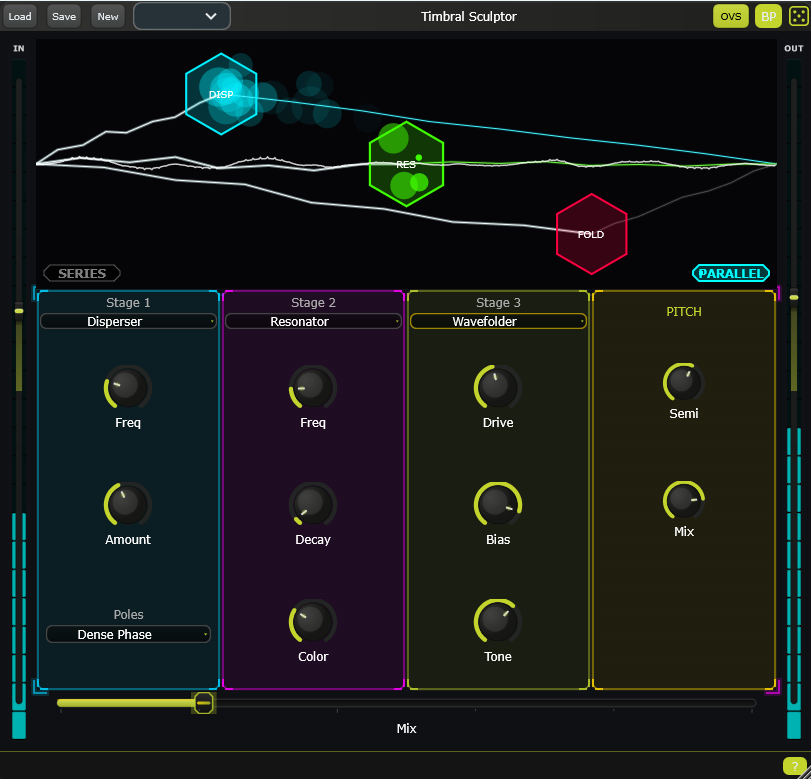
The Timbral Sculptor is a three-stage spectral processing engine designed to fundamentally alter the DNA of your audio. Unlike a standard EQ or compressor that acts on the sound, the Timbral Sculptor reaches inside it.
It combines three distinct synthesis topologies—Phase Dispersion, Wavefolding, and Physical Resonation—into a flexible routing matrix. Whether you need to smear the transients of a snare drum to give it that "laser-whip" snap, fold a sine wave into a growling bass, or metallicize a vocal into a robotic texture, this module handles the heavy lifting.
Under the hood, it utilizes a "Deep Fix Architecture" with 2x Oversampling and a proprietary Smart Auto-Gain system, ensuring that while you mangle the harmonics, your output levels remain perfectly balanced and alias-free.
Key Features
-
1
The "Spectral Triad" Engines
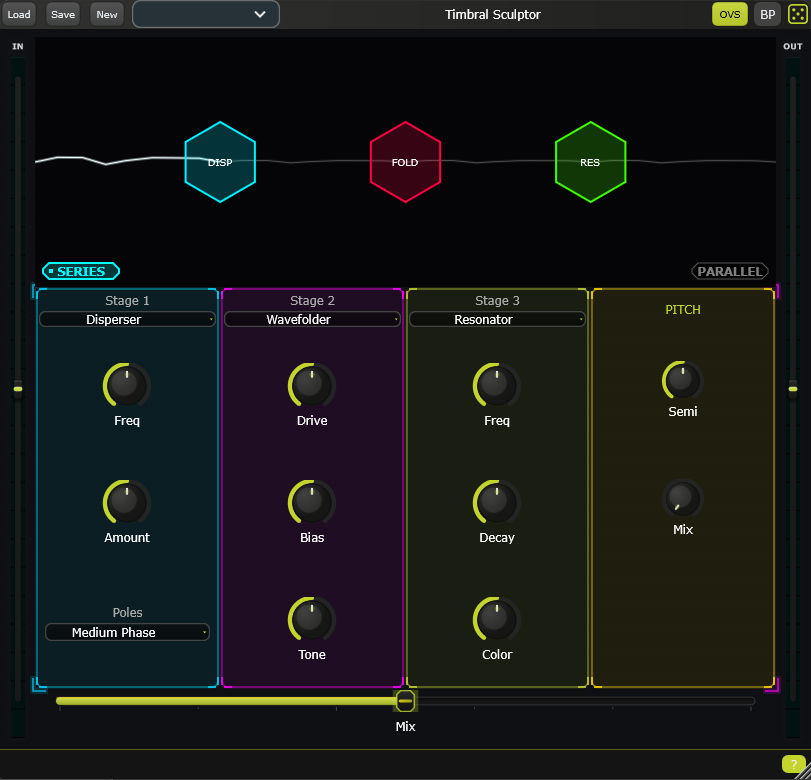
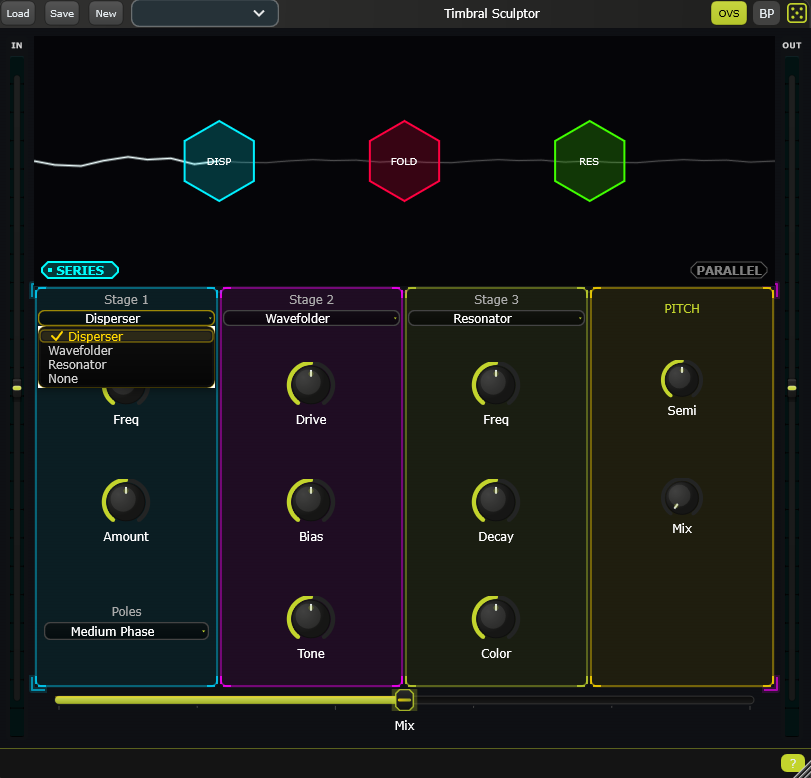
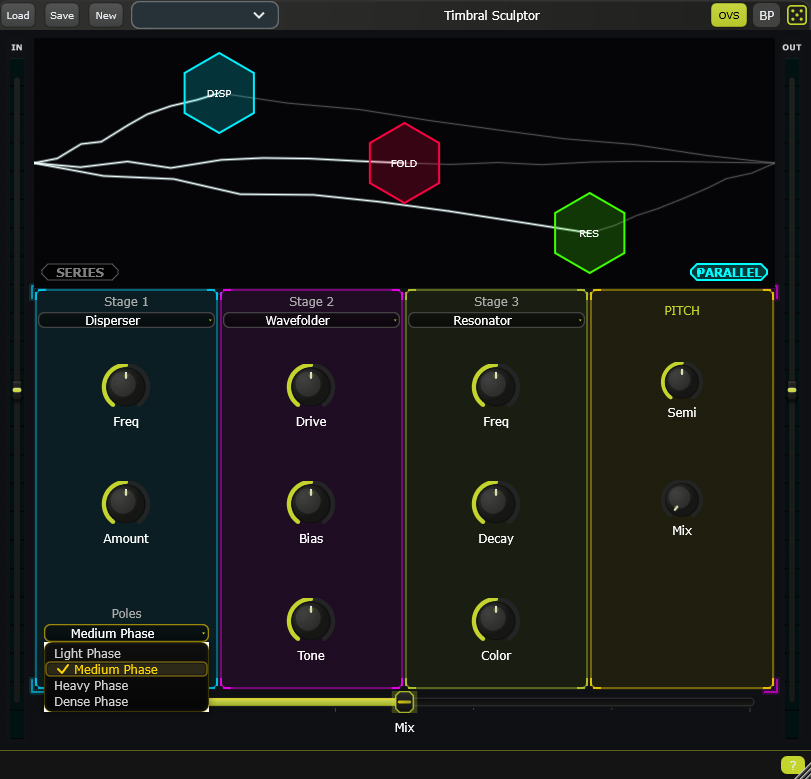
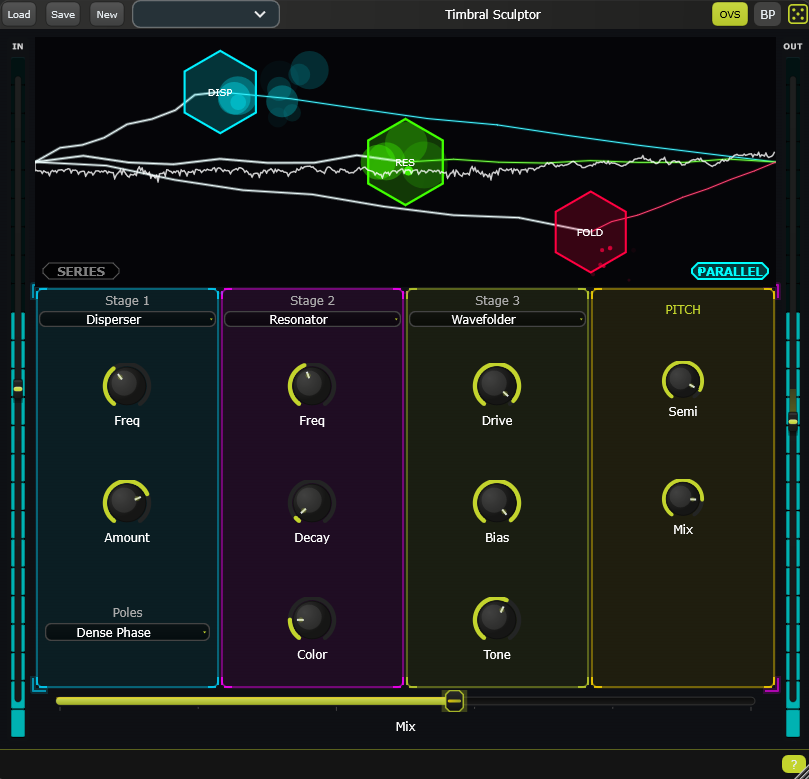
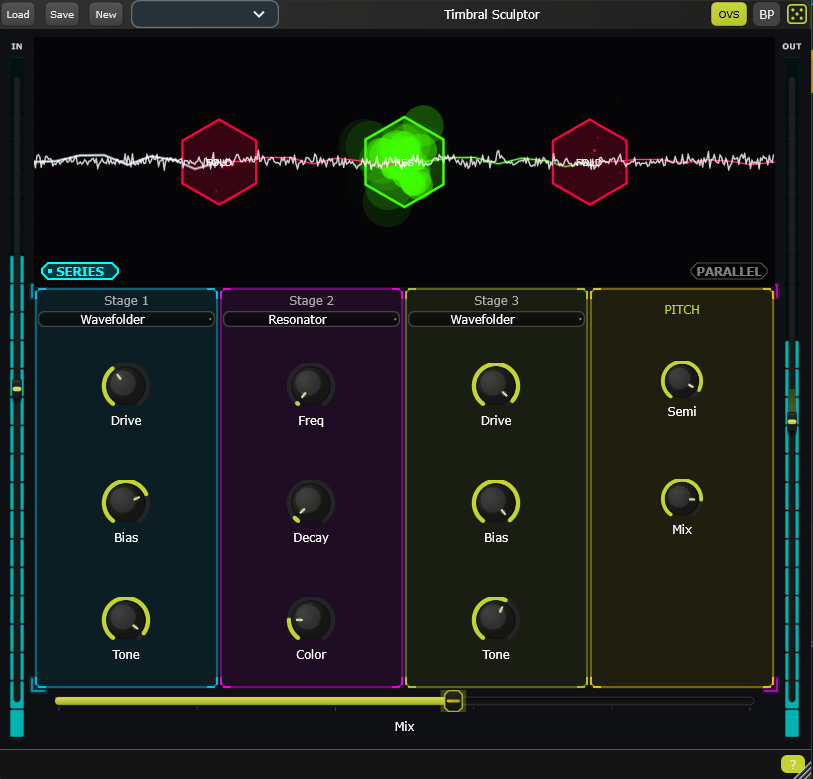
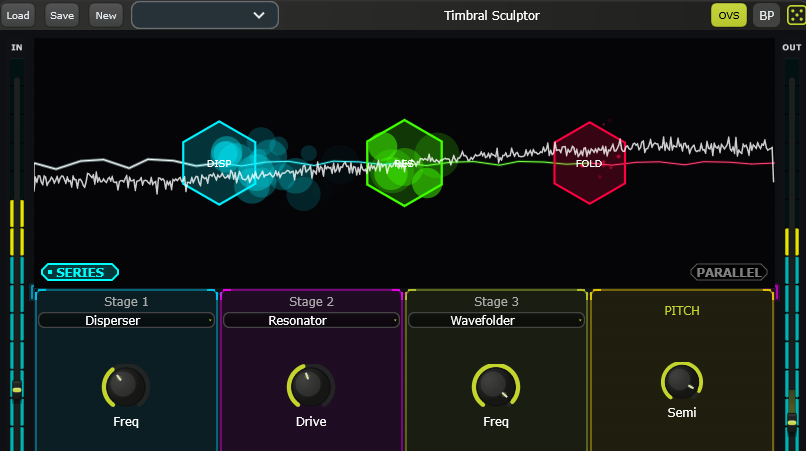
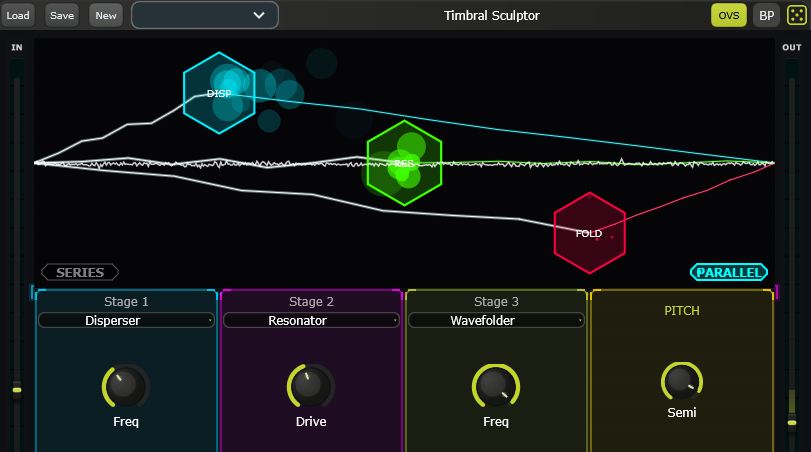
The core of the unit consists of three assignable slots, each capable of loading one of three algorithms:
- The Disperser: A cascading all-pass filter network. It rotates the phase of frequencies differently across the spectrum. Use this to smear high-amplitude transients, turning a sharp click into a thick, punchy thud without changing the frequency balance.
- The Wavefolder: A West-Coast synthesis style distortion that folds the waveform back onto itself rather than clipping it. Use this to add rich, upper-harmonic growl to simple sources like sub-basses.
- The Resonator: A physical modeling feedback loop with Color and Decay controls. Use this to imprint a tonal, metallic ring onto atonal percussion.
-
 2
2Series & Parallel Routing Matrix
You are not stuck with a simple signal chain.
- Series Mode: Runs audio through Stage 1 > 2 > 3. Ideally used for destructive sound design (e.g., dispersing a transient before folding it to get a cleaner distortion).
- Parallel Mode: Splits the audio into three copies, processes them separately, and sums them back together. Ideally used for texturing (e.g., keeping the transient clear in one stage while adding a metallic tail in another).
-
3
Integrated Shimmer Pitch Shifting
Post-processing includes a high-quality (HQ) Shimmer Pitch Shifter. Unlike standard pitch shifters, this processor is tuned specifically for shimmer effects, allowing you to blend shifted harmonics (up or down) into the wet signal path for ethereal textures or demonic vocal deepening.
Audio Demos
Specifications
FAQ
Q:What is the "Poles" setting in the
Disperser stage doing?
+
The Poles setting controls the density of the phase rotation. In the code, this maps directly to the complexity of the all-pass filter network.
- Light/Medium Phase: Subtle thickening, ideal for vocals or acoustic guitars.
- Heavy/Dense Phase: Extreme transient smearing, creating the classic laser zap or wet sound often heard in Psytrance kicks and modern Dubstep basses.
Q:Why would I use Parallel routing
over Series?
+
Series routing is destructive—whatever Stage 1 does, Stage 2 has to deal with. This approach is ideal for aggressive sound design. Parallel routing is additive. It allows you to preserve the character of the Disperser in one layer while simultaneously adding the grit of the Wavefolder in another. The result is a sound that is both punchy and distorted, rather than a muddy mess.
Q:Does the Pitch Shifter track
perfectly for melody?
+
The onboard Pitch Shifter is designed as a Shimmer effect rather than a hard-tuning autotune processor. It operates in High Quality mode with a large buffer, making it exceptional for creating atmospheric layers, detuned horrors, and wideners, but it is best treated as a creative effect rather than a utility pitch correction tool.